
Pasta Fresca
"We don't value craftsmanship anymore! All we value is ruthless efficiency, and I say we deny our own humanity that way!" — Bill Watterson
Let’s rewind twenty years or so, my grandmother’s house was that place. We’d spend hours in the basement preparing food, some for dinner, some for the freezer, some to take home and some just because I’d ask. Besides the cookies and fried dough, stuffed olives, cutlets and the likes, what stood out the most was the pasta. I was already in love with eating it, so making it fascinated me. Being from Abruzzo her pasta making was relatively simple, spaghetti, tagliatelle, lasagne and cannelloni for the most part. No dough she ever made was the same but she knew what she was doing, often mixing a dryer dough and adding egg or water until manageable. We used a hand crank laminator that was fixed to the pasta board with a c-clamp, I’d crank mostly, and do whatever else my little hands could handle.
Making fresh pasta requires skill, most Italian women would learn the common fare of the region and rarely stray away from that. Their hands hardened from a lifetime of mixing and shaping. It seems painful but there’s something poetic about it. Modern pasta makers have it different, the internet and it’s infinite resources give us the upper hand. We make pasta from all the regions, with recipes, tips and how-tos at hand. That doesn’t mean that your first time pasta making will be a great success. If you prepare yourself and understand what it is your doing, it may not be a complete disaster. Technology and equipment help too, motorized laminator/sheeter, vacuum sealer, stamps, spray bottle and such change how things are done, making the process less painful and more forgiving.
Another place I seemed to quite like was the local pasta shop. Fresh pasta filled the display fridge, freezers stocked with ravioli, gnocchi and sauces ready to go. My mom would take us there, we’d usually get veal stuffed ravioli and rosé sauce. Sometimes a few arancini made it out with us as well. I’d eat mine as soon as I got in the car if I could. Ironically, I’ve come to dislike what that place represents now; pale pasta with questionable ingredients, no soul just profit margins.
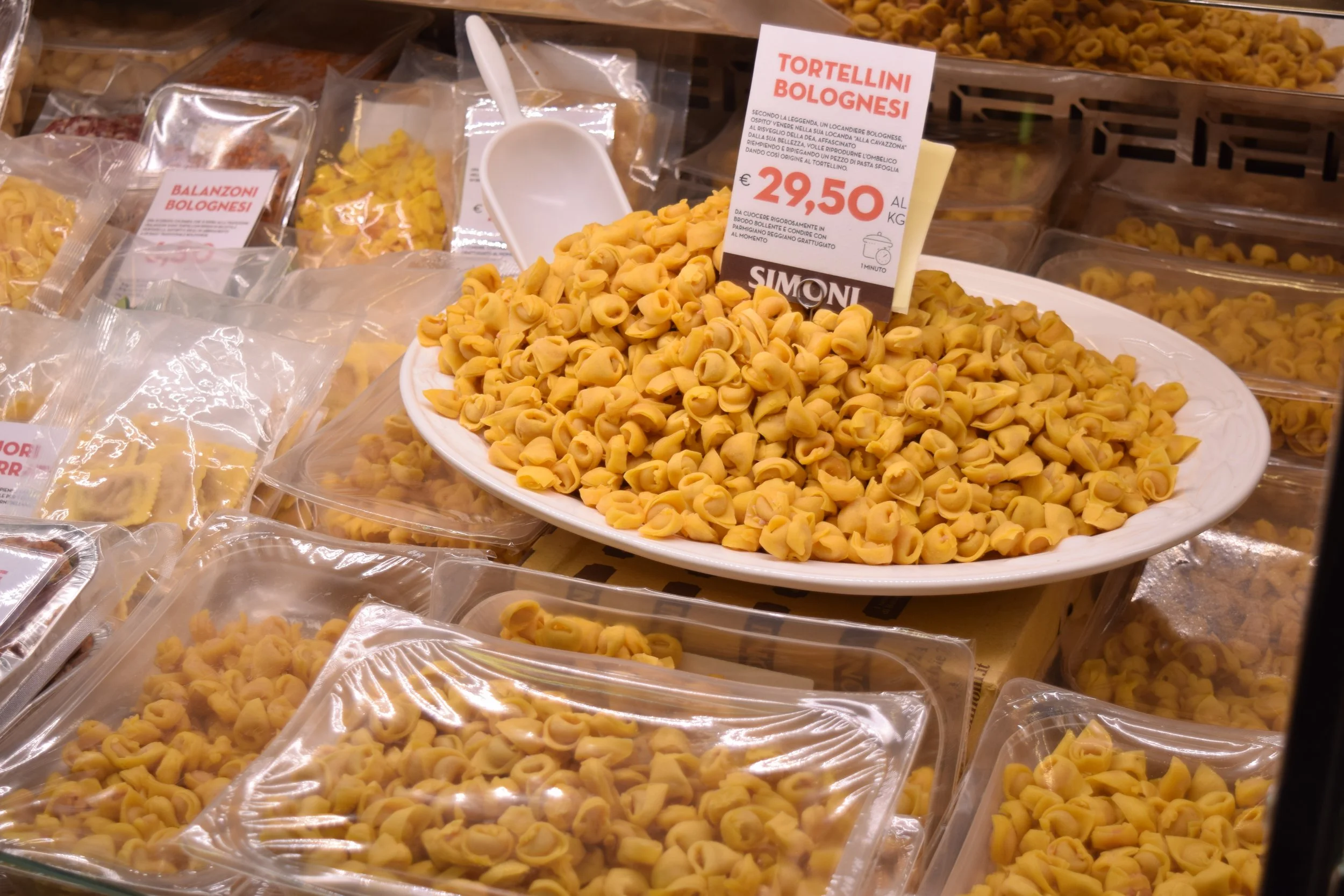
Fresh pasta is a broad spectrum. Semolina based dough in the south, rich egg dough in the north is the rule of thumb. Differences reflect product availability, tradition and social classes in the past. Emilia Romagna is home to and reigns supreme in all things pasta all’uovo (egg pasta). Home to artisans who dedicate their lives to hand making sfoglia, tortellini, balanzoni and so much more. Other regions in the north have their specialties, like Piemonte with their plin and tajarin. There’s also pici in Tuscany, pizzoccheri in Lombardy, and so many more. Where the north is concerned, Bologna is pasta Mecca, it is undeniable.
The south is different, creativity and skill are expressed through the manipulation of dough. Essentially the same dough is used all over to make completely different shapes of pasta. Orecchiette are the staple in Bari, using a precise gesture, a lot more difficult than it looks. The blade of a knife pulls a piece of dough across a board into these little ears, or what the locals like to call “strascinati”. Cavatelli are found all over the south, the shape and name varying widely, in Sardegna they’re called gnocchetti or “malloreddus”. Fusilli avellinesi are very special, as are maccheroni al ferretto. Both are made using a metal rod, a specific movement and amount of pressure.
Now I’ve skipped over plenty of types of pasta, shapes and doughs because well frankly there’s too many of them, but well get to it one article at a time.
So maybe you put on an apron and have some fun pulling your hair out trying to make it yourself. You can also get dressed up and head to that fancy italian spot everyone is raving about. I’ll be honest here, the chances that whatever you make (assuming you have a basic amount of cooking experience at least), will be better than that of the professional who makes pasta for a living are very low. I’m not trying to deter you. Unless you intend on beginning an amateur pasta making journey, the pasta you make for the most part will just be alright.
Support your local pasta makers, they are craftsmen like any other. Their hand shaped delicacies are nothing like the mass produced, pale, bland excuse for fresh pasta they sell in stores. Eating in these places gives you a first hand experience of what the epitome of fresh pasta is like. Live the Italian experience, sit back, relax and enjoy.