
Pasta Fresca
"We don't value craftsmanship anymore! All we value is ruthless efficiency, and I say we deny our own humanity that way!" — Bill Watterson
Let’s rewind twenty years or so, my grandmother’s house was that place. We’d spend hours in the basement preparing food, some for dinner, some for the freezer, some to take home and some just because I’d ask. Besides the cookies and fried dough, stuffed olives, cutlets and the likes, what stood out the most was the pasta. I was already in love with eating it, so making it fascinated me. Being from Abruzzo her pasta making was relatively simple, spaghetti, tagliatelle, lasagne and cannelloni for the most part. No dough she ever made was the same but she knew what she was doing, often mixing a dryer dough and adding egg or water until manageable. We used a hand crank laminator that was fixed to the pasta board with a c-clamp, I’d crank mostly, and do whatever else my little hands could handle.
Making fresh pasta requires skill, most Italian women would learn the common fare of the region and rarely stray away from that. Their hands hardened from a lifetime of mixing and shaping. It seems painful but there’s something poetic about it. Modern pasta makers have it different, the internet and it’s infinite resources give us the upper hand. We make pasta from all the regions, with recipes, tips and how-tos at hand. That doesn’t mean that your first time pasta making will be a great success. If you prepare yourself and understand what it is your doing, it may not be a complete disaster. Technology and equipment help too, motorized laminator/sheeter, vacuum sealer, stamps, spray bottle and such change how things are done, making the process less painful and more forgiving.
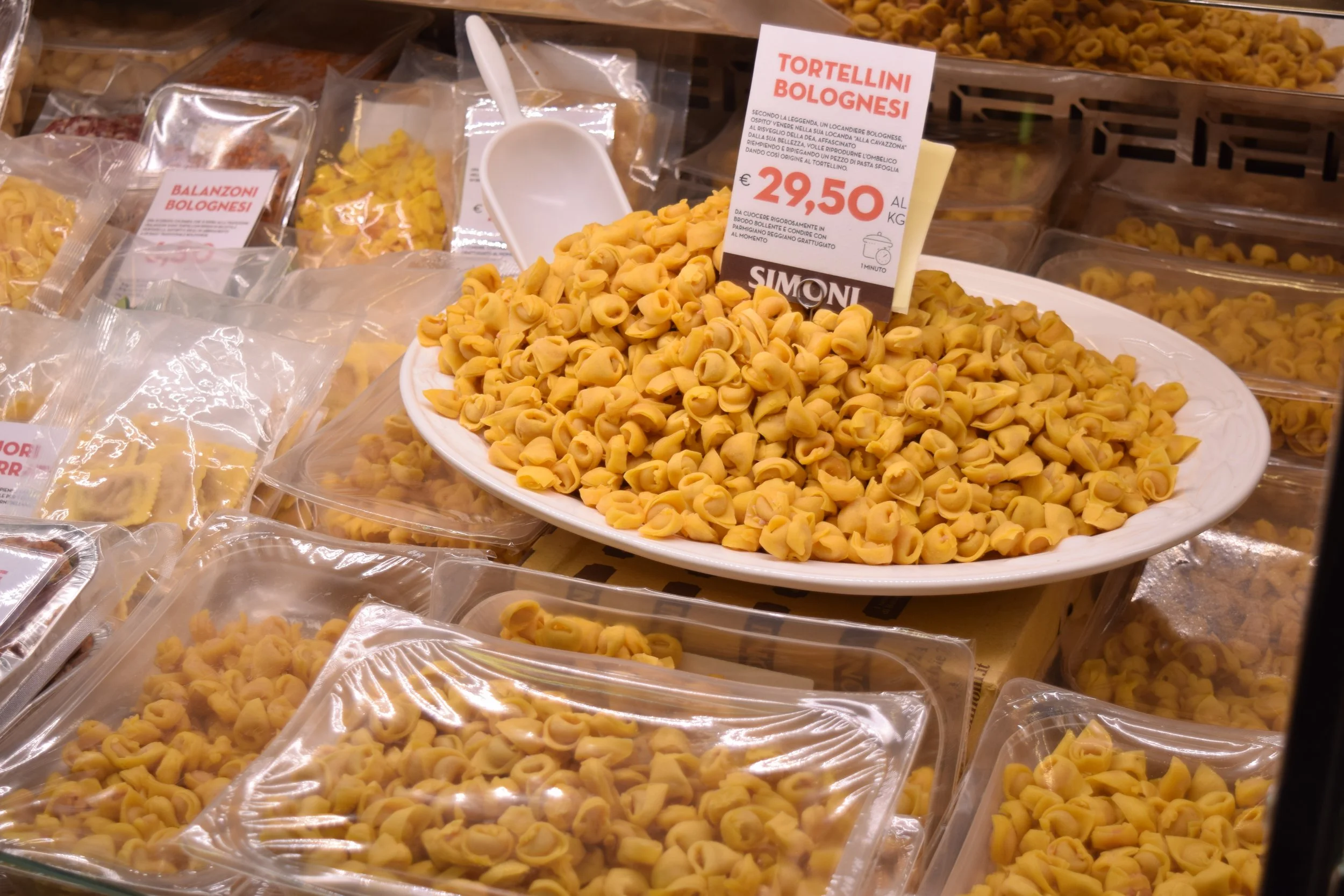
Another place I seemed to quite like was the local pasta shop. Fresh pasta filled the display fridge, freezers stocked with ravioli, gnocchi and sauces ready to go. My mom would take us there, we’d usually get veal stuffed ravioli and rosé sauce. Sometimes a few arancini made it out with us as well. I’d eat mine as soon as I got in the car if I could. Ironically, I’ve come to dislike what that place represents now; pale pasta with questionable ingredients, no soul just profit margins.
Fresh pasta is a broad spectrum. Semolina based dough in the south, rich egg dough in the north is the rule of thumb. Differences reflect product availability, tradition and social classes in the past. Emilia Romagna is home to and reigns supreme in all things pasta all’uovo (egg pasta). Home to artisans who dedicate their lives to hand making sfoglia, tortellini, balanzoni and so much more. Other regions in the north have their specialties, like Piemonte with their plin and tajarin. There’s also pici in Tuscany, pizzoccheri in Lombardy, and so many more. Where the north is concerned, Bologna is pasta Mecca, it is undeniable.
The south is different, creativity and skill are expressed through the manipulation of dough. Essentially the same dough is used all over to make completely different shapes of pasta. Orecchiette are the staple in Bari, using a precise gesture, a lot more difficult than it looks. The blade of a knife pulls a piece of dough across a board into these little ears, or what the locals like to call “strascinati”. Cavatelli are found all over the south, the shape and name varying widely, in Sardegna they’re called gnocchetti or “malloreddus”. Fusilli avellinesi are very special, as are maccheroni al ferretto. Both are made using a metal rod, a specific movement and amount of pressure.
Now I’ve skipped over plenty of types of pasta, shapes and doughs because well frankly there’s too many of them, but well get to it one article at a time.
So maybe you put on an apron and have some fun pulling your hair out trying to make it yourself. You can also get dressed up and head to that fancy italian spot everyone is raving about. I’ll be honest here, the chances that whatever you make (assuming you have a basic amount of cooking experience at least), will be better than that of the professional who makes pasta for a living are very low. I’m not trying to deter you. Unless you intend on beginning an amateur pasta making journey, the pasta you make for the most part will just be alright.
Support your local pasta makers, they are craftsmen like any other. Their hand shaped delicacies are nothing like the mass produced, pale, bland excuse for fresh pasta they sell in stores. Eating in these places gives you a first hand experience of what the epitome of fresh pasta is like. Live the Italian experience, sit back, relax and enjoy.
Extruded Pasta
"Life is a combination of magic and pasta" - Federico Fellini
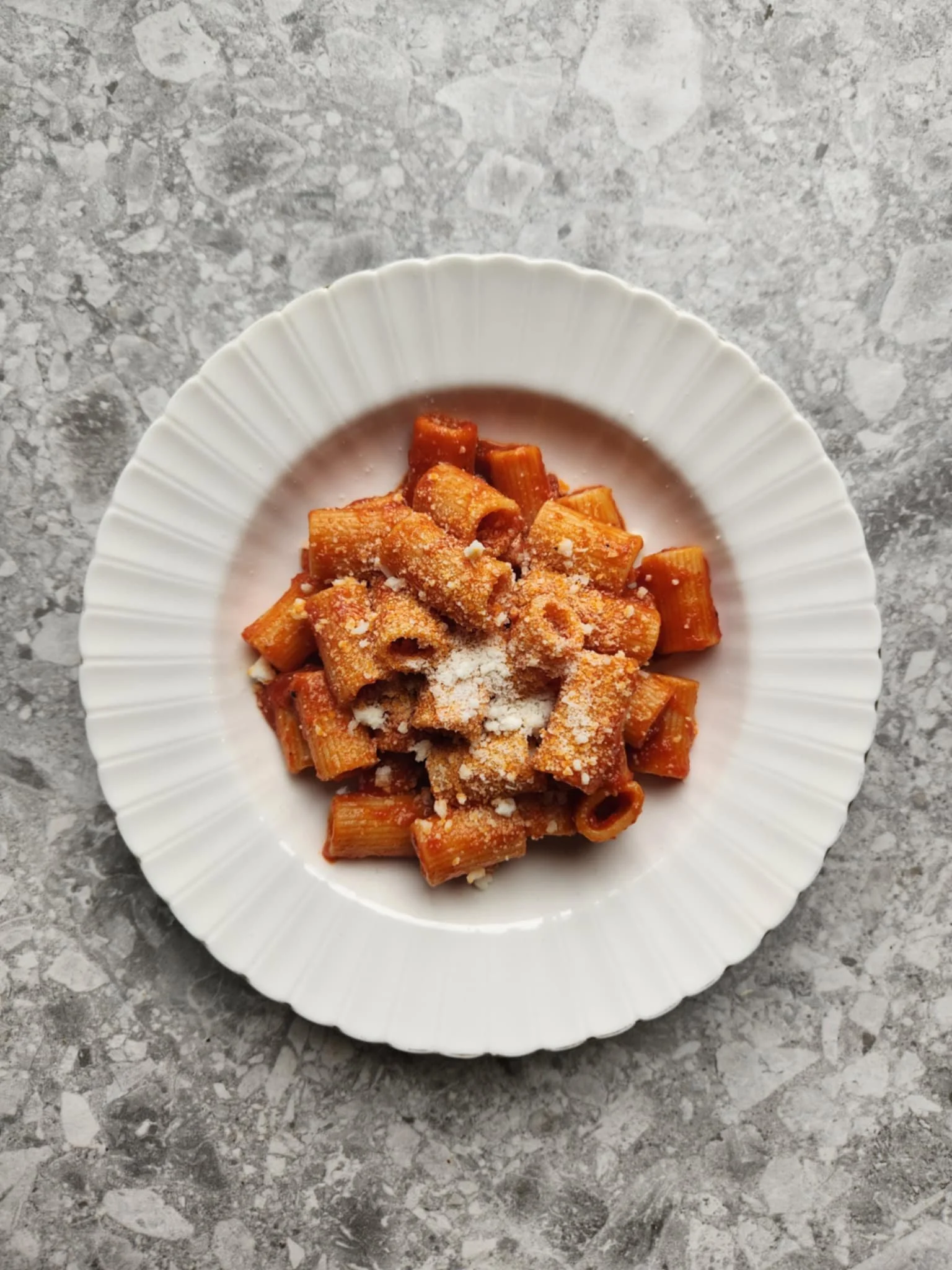
Don’t let the name confuse you, this is the pasta you know and love. Penne, rigatoni, bucatini, the dry pasta on your supermarket shelves, for the most part is extruded. What does that mean? Quite simply, dough made of hard durum wheat (semolina) and water, is fed through dies at a high pressure, these dies give the pasta their shape and texture.
“Trafilata al bronzo” is often written on Italian pasta, meaning the dies used were made of bronze as opposed to brass or even worse teflon. Bronze dies leave pasta with a rough surface that sauce can cling to and releases more starch into the water while cooking creating a more potent pasta water for sauce building.
So how do you know which one to buy? Start with made in Italy, then be sure they’re actually using Italian grain. Once you’ve done that, let your eyes serve you. Good pasta should not be too yellow and smooth looking. Great pasta has a visible texture to it and an almost off white colour often giving off the impression that it’s shedding flour.
Some shapes will lend themselves better to certain sauces, better sauce clinging ability, more bite or different mouthfeel. That’s why you’ll find fifteen varieties of Penne for example; lisce, rigate, big, small and so on. With time you’ll see what works well for you. Familiarize yourself with a few brands you enjoy, as cuts (shapes) may be limited from producer to producer.
Salt your water well, like good soup and then add a little bit more. Don’t trust the cooking time, stay with your pasta, stirring often. When you’re two minutes away from the shortest suggested cooking time, start to taste the pasta. Strain it when it’s slightly less cooked than you prefer. Once strained and afterwards in the sauce, pasta will continue to cook, accounting for this and removing the pasta earlier will preserve the al dente you’re trying to achieve. Good quality pasta will stay al dente/ have good bite to it for a very long time and leaves huge margin for error. Entry level pasta tends to go from raw to overcooked very quickly so be mindful of that. Never rinse your pasta and don’t forget to keep your pasta water, starch is your friend.
Growing up in an Italian household, I’m of the belief that dry pasta is the best goddamn thing in the world. It showed up in many forms throughout my life, my mom’s penne with chicken cream sauce, baked rigatoni with meat sauce, Nonna’s sugo hiding braised treasures like meatballs, veal cubes, braciole, pork ribs and sausage served along side a bowl of orecchiette that could feed two. At home we had the hunk of parm and the cheese grater, Nonna always had a bag full of grated cheese ready to go. When i got my own apartment I must have eaten pasta five times a week, besides the fact that i love it, it’s so inexpensive and versatile. For a few dollars I had food that I actually wanted to eat, that was delicious, with enough for that night and lunch the day after. To me pasta is a blank canvas made of carbs, ready to be art, for your soul and stomach.
La Cantina
“You don’t need a silver fork to eat good food.”
– Paul Prudhomme
Everyone know’s that Italians tend to hold enough food and drink to last at least a year in their cellars. Packs of pasta stacked high, different brands, bought on special presumably. Cases of tomatoes, cans, jars, the homemade stuff, vats of olive oil.
Various vegetables from the market or the garden preserved in mason jars, pickled, in oil, in sirop, canned. Hunks of cured meats and sausages hanging from the ceiling the old fashion way, far from any pencil pusher with a clipboard telling you it isn’t sanitary. Chest freezers with lasagnas, tiramisu, stuffed olives, lamb chops, lamb legs, all the meats, some ice cream and other prep.
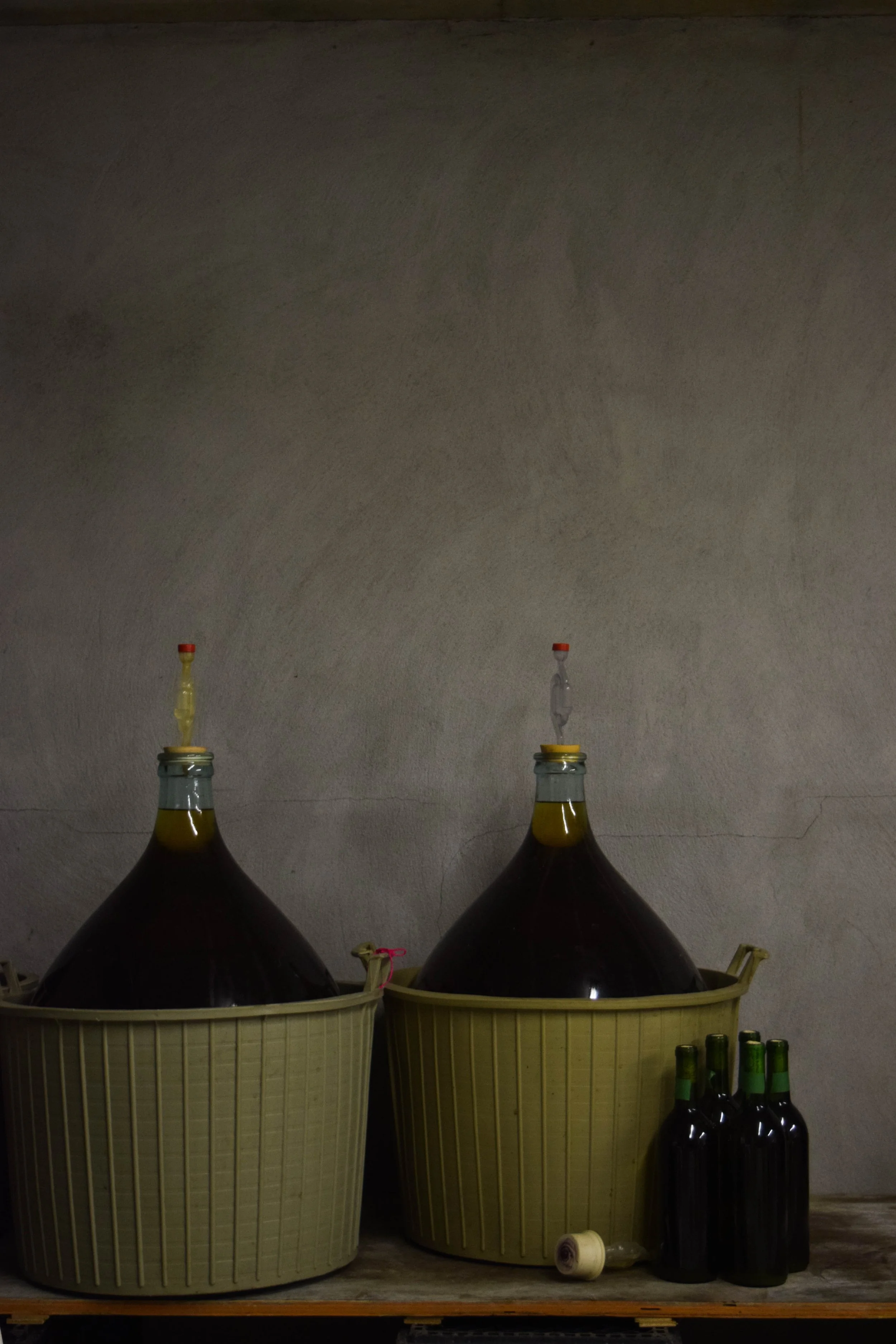
My grandmother used to own a bakery, so her cellar “went hard” as the kids say. Deli slicer ready to go, whole legs of prosciutto, dried bread in empty flour bags ready to be processed into breadcrumbs for fried artichokes or cutlets. Nonno made wine, or the closest thing to wine he could manage at least. Hundreds of litres stored in big glass demijohn’s at the back of the cellar, transferred into gallons for daily consumption when needed.
Most of us don’t have cellars these days, but some aspects of this way of living can be incorporated into our modern world and should. Depending on the size of your dwelling scale accordingly, and if necessary do more with the little you have. Every cook needs a pantry and that’s what we’re getting at here, the basics and then some based on your needs.
An important thing to remember is that a pantry is like a wine cellar and is meant to be developed over time, through discovery, acquisition of goods, information and opportunity. There is no need to spend hundreds of dollars on multiple olive oils, vinegars and all the finest spices at the beginning. Buy salt, good salt, flour, rice, pasta, tomatoes, some herbs, good produce, get a little foundation going. Once that is working for you and you’ve got a decent olive oil and some base vinegars and you want to explore then try a few things. Chances are you’ll try something at a friend’s place that you’ll like and your repertoire will expand that way.
Don’t be limited by the “Italian only” mentality, great products can come from anywhere you just need to know what you’re looking for. Spanish anchovies reign supreme, good olive oil comes from all around the Mediterranean, butter, cheese, olives, spices, not from Italy can make your pantry diverse, interesting and better.
Keep your shit tight, ORGANIZE. Containers, labels, sections, some sense of order helps a lot. I know it’s really romantic to just have things placed how they fall in the moment, but it’s a road to lunacy. What a beautiful feeling to know where everything is when you need it.
We will break down all the products that make up a proper pantry in this series “La Cantina”.
Lost in the sauce
“You need an entire life just to know about tomatoes.” -Ferran Adria
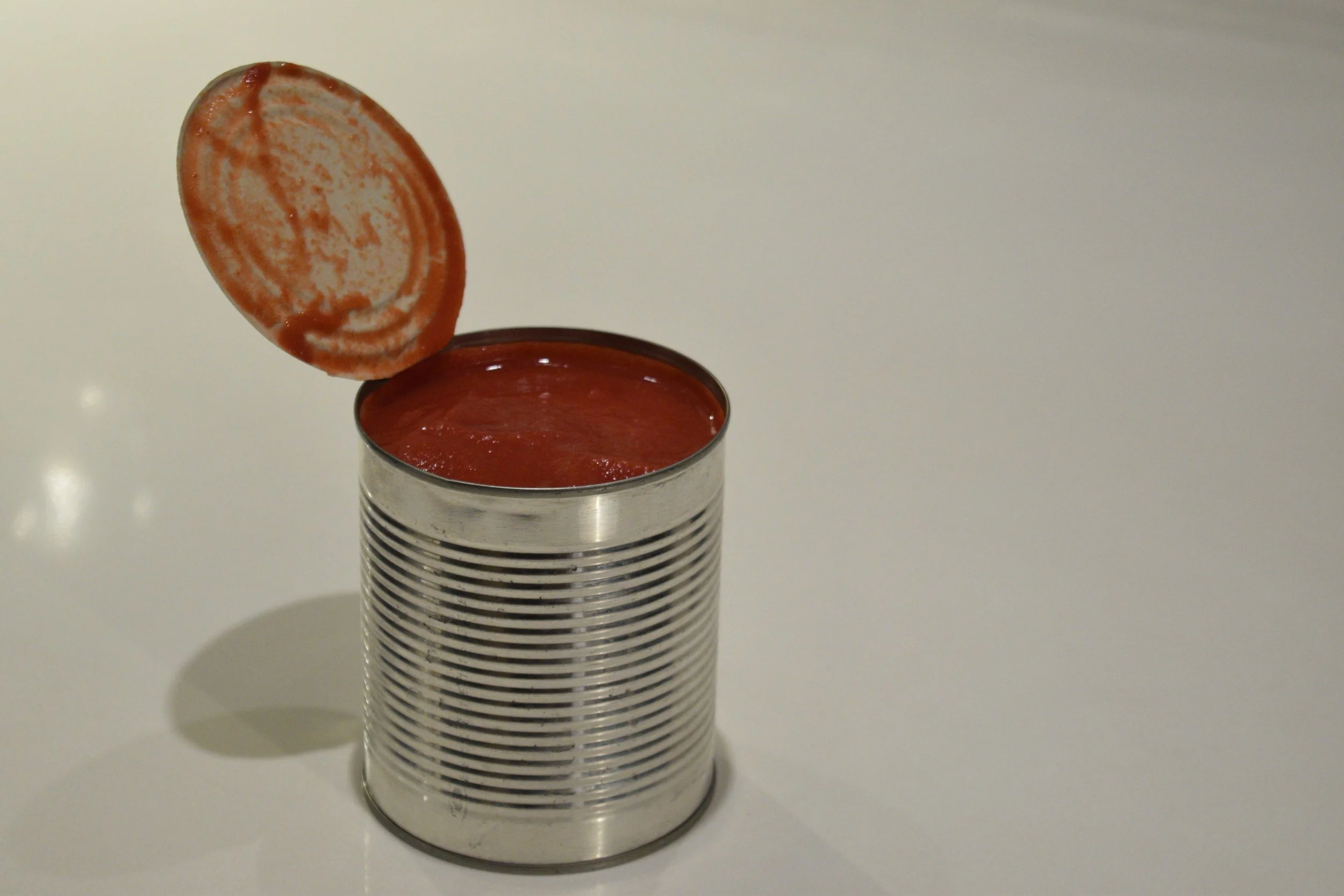
Sometimes we’re really good at over complicating the simple things, tomato sauce seems to be no different. So much scrutiny over ingredients, cooking time, garlic, sugar, carrots and many other things we can’t seem to agree on. At the end of the day what ends up in your pot is your business but if you’re trying to make sauce out of tomatoes start here. Good quality tomatoes, Italian preferably, with some exceptions. Whole peeled, crushed, diced, passata, whatever floats your boat. Tomatoes, salt and maybe basil should be the only ingredients in an exceptional quality of canned tomato.
Now tomatoes are acidic by nature, the better ones less so. Your job is to balance that out, cook down an onion in olive oil so that all that is left is a subtle sweetness. If you like onions add plenty, if not just a little will do. The olive oil you use can be neutral so as to showcase the tomatoes or very bold as to add another layer of depth. Once your onions are good and ready you can add your tomatoes, cook them for 25 to 45 minutes on a medium to low heat to avoid too much reduction. An overcooked sauce tends to become dark and acidic, finding the balance of freshness and sweetness it the key. Don’t forget to salt as you go and taste what you cook!
This is usually around the time when the confusion starts to kick in and people tend to get offended. Sugar has no place in tomato sauce, carrots do little to balance out acidity and affect the flavour, your whole bloody spice cabinet can stay where the f*** it is. A bay leaf, some fresh basil, a rind of parm, never hurt anyone. If you like garlic add it with your onions at the beginning, this will give the sauce a completely different style so keep that in mind, garlic is great but it’s not for everyone. This is a guide for those who need it, not a rulebook to abide by. That’s it, simple sauce. The base for parmigiana, meatball braising, pasta al pomodoro and so many classics.
Once the basic concept is understood, the time comes for more ingredients and different flavour profiles. Simple additions like anchovies, guanciale, chilies, etc. can take your sauce in another direction. Making meat sauces and ragù require more technique, vegetables, wine, spices…often very long cooking times (fat from meat balances out the acidity of reduced tomatoes).
Hopefully I have provided some form of structure for your future red sauce endeavours. Italian cooking is the minimal intervention of quality ingredients, less is more, don’t get it twisted.
Food philosophy
"Food is everything we are. It's an extension of nationalist feeling, ethnic feeling, your personal history..." – Anthony Bourdain.
Would it be wrong to say that the majority of people have completely lost connection with the food they eat? There is no understanding of the true nature of things, how they grow, how to use them. The sterile delicacies from hell some people call food that you would find in the frozen aisle of a grocery store have separated us from reality. That being said how can one expect the same people to create real, slow food without a little bit of guidance? which is also not in abundance…
Too much misinformation or over complication for the sake of being unique. While some preparations are inherently elaborate in their nature, most cooking is pretty straight forward. It is also completely normal that food and cooking takes time and investment. You will make mistakes, things will burn, ratios miscalculated, sauces split, like any other skill or part of life, accept that. Once you’ve gotten over all of that, remind yourself that you’re just a tiny human making something to eat. It doesn’t have to be painful, it could even be beautiful.
Small changes in how you purchase produce, the tools you use and how you execute preparations can drastically transform your food reality. Fancy equipment or the latest tech is not what I’m talking about here, an understanding of what is good and what is shit regardless of age or price. Any stainless steel pot or pan will serve you way longer than that fancy non-stick chemical leeching blasphemy they promise will revolutionize the way you fry an egg.
Knowing how to identify quality ingredients and how to use them makes a world of difference, price is not always your best guide. Salting your pasta water with expensive finishing salt isn’t luxurious it’s just plain stupid. On the other hand, an excellent olive oil can take a simple tomato sauce to the next level. This may seem obvious to some of you but for the sake of this being informative, we shall assume that the reader has a very basic understanding of food and culinary practices.
Let us take a bit from the chefs, how they operate and structure their kitchen and a bit from the old timers, operating with little means and making the most of it when it was all they had. Applying those two philosophies facilitates making exceptional food affordably and efficiently. Following recipes is limiting, the ability to interpret how a preparation comes together and navigate around obstacles like missing ingredients or an unfavourable cooking situation is the foundation of a great cook.
Please do not expect an antiquated interpretation of “how things should be”. Tradition exists as a guideline, it is recognizant of ingredients available in said regions at the time. To shy away from the influence modern times and the rest of the world can have on this food culture seems foolish to me. Food evolves, we should as well.